Everyone needs Sovereign IT now

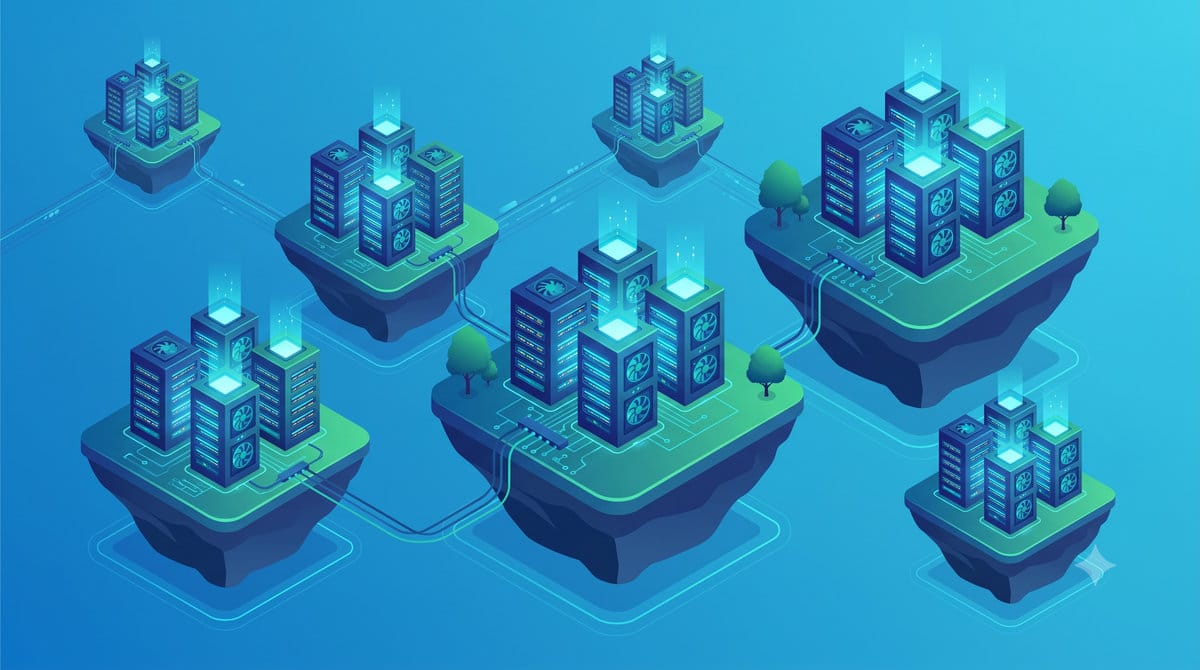
Don't put your eggs in someone else's basket
For decades, the global technology playbook was simple: outsource to the most efficient cloud provider, centralize operations in hyper-scale infrastructure, and abstract the complexities of hardware away. But as recent global disruptions have proven, an unshielded reliance on centralized, foreign-controlled tech infrastructure has turned from a competitive advantage into an existential risk.
Today, the conversation has fundamentally shifted. Sovereign IT, the capacity of an organization, enterprise, or nation-state to control its own digital destiny, data, and infrastructure independently, is no longer a theoretical compliance checkbox. It is a critical baseline for survival in a fractured world.
1. The Myth of the Borderless Cloud
The early promise of the internet was built on global, borderless access. However, recent geopolitical tensions, localized regional power grid failures, and sweeping sanctions have completely shattered this illusion. When a single control plane failure or a policy shift in a foreign jurisdiction can instantly drop critical domestic platforms, government portals, or corporate operations thousands of miles away, reliance on single monolithic providers reveals its dark side.
True sovereignty requires moving away from complete reliance on remote, third-party centralized clouds and investing heavily in localized, resilient infrastructure. When infrastructure is sovereign, localized systems can continue running in fully disconnected or air-gapped modes, shielding local societies from global technical or political supply-chain shocks.
Key Takeaway: Tech centralization creates systemic single points of failure. If your core data pipelines cross geopolitical borders, your operations are effectively subject to foreign regulatory whims or collateral infrastructure damage.
2. Data Sovereignty: Protecting Assets and National Wealth Through Physical Local Storage
In the era of advanced data analytics and artificial intelligence, data is the ultimate economic and strategic commodity. When enterprises and public institutions channel all their data through foreign hyper-scale environments, they risk data leakage, intellectual property extraction, and extraterritorial regulatory exposure.
While data governance policy is written on paper, it is ultimately enforced in silicon and concrete. You cannot have true data sovereignty without sovereign local storage. For years, organizations blindly migrated to the public cloud, treating on-premises storage as an obsolete relic. Today, we are witnessing a massive wave of data repatriation; businesses pulling their most critical datasets back to local, physically controlled storage environments.
Why Physical Local Storage is Non-Negotiable:
- The Vulnerability of Undersea Cables: Over 95% of international data flows through underwater fiber-optic networks. In an age of hybrid warfare, these physical cables are highly vulnerable targets. If a nation’s connection to global hyper-scale data centers is severed, only organizations with robust local storage arrays can keep their critical operations online.
- Immunity to Remote "Kill-Switches": Relying on foreign cloud storage means your access to your own data can be revoked overnight due to geopolitical sanctions, contract disputes, or sudden regulatory shifts. Local, on-premises, or national-cloud storage ensures you always retain the physical keys to your data assets.
- Eliminating Latency and Egress Fees: As datasets swell into petabytes, transferring data back and forth to foreign servers incurs massive network egress costs and introduces latency that paralyzes real-time decision-making. Local storage keeps hot data physically close to the edge where it is consumed.
3. The Private AI Revolution and Autonomous Code
The massive explosion of AI over the past several years has added a complex layer to digital sovereignty. Relying strictly on foreign-hosted, black-box AI APIs means giving up proprietary data as training fuel for systems you do not own. Businesses and governments are realizing that to retain an edge, they must build and deploy customized, open-weights AI models hosted on localized, private hardware.
- Intellectual Property Security: Running models locally on sovereign storage prevents corporate intellectual property from leaking into global training sets.
- Operational Independence: Localized AI execution protects operations from being abruptly cut off due to hardware export bans or vendor policy shifts.
- Contextual Accuracy: Sovereign models can be trained specifically to respect local cultural nuances, legal structures, and linguistic requirements.
4. Federated Sovereignty: Interoperability Through Open Standards
A common misconception is that digital sovereignty requires total isolationism; a fracturing of the internet into uncommunicative silos. In reality, true sovereign IT champions federated independence. By breaking away from proprietary vendor ecosystems and anchoring infrastructure to open standards, independent systems can achieve complete operational autonomy while remaining globally collaborative.
The Mechanics of Open Interoperability:
- Avoiding Vendor Lock-In: Utilizing open-source baselines, such as Linux, Kubernetes, Open Container Initiative (OCI) images, and SQL databases, ensures that applications and data storage setups are fully portable. If a foreign provider changes their terms or cuts access, workloads can instantly be spun up on independent local infrastructure.
- Cross-Border Collaboration: Open communication protocols (like the Matrix protocol for secure messaging or ActivityPub for decentralized networking) allow separate sovereign entities to securely federate. Two entirely distinct nations or enterprise networks can seamlessly collaborate without either party having to yield data control to a third-party monopoly.
- Decentralized Resilience: When networks communicate via open, documented web APIs rather than closed, proprietary software developer kits (SDKs), failure in one node or jurisdiction cannot systematically cripple the adjacent networks.
5. Defending the Digital Attack Surface
Modern conflicts are increasingly waged in the gray zones of cyber space, where software updates and consumer application pipelines are weaponized. We have witnessed core infrastructure software vulnerabilities targeted systematically to compromise telecommunications, power, and logistics networks. Furthermore, notification delivery backbones have been hijacked during real-world kinetic operations to spread disinformation or create systemic panic.
By implementing a sovereign IT posture, organizations can implement rigorous open-source auditing, run customized local security patches, and isolate critical utility pipelines from public, easily manipulated foreign networks.
Vulnerability Vector vs. Sovereign IT Response
| Vulnerability Vector | Global Centralization Risk | The Sovereign IT Response |
|---|---|---|
| Cloud Control Planes | Remote failures drop regional emergency services. | Localized, edge-resilient hybrid private clouds. |
| Physical Infrastructure | Fiber-optic cable sabotage or foreign embargoes cut off access to data. | Sovereign Local Storage and edge arrays running independent of external uplinks. |
| AI & Analytics Model Lock-in | Corporate IP absorption and sudden access revocation. | On-premises, open-weights model deployments hosted locally. |
| Ecosystem Isolation | Proprietary lock-in forces total dependence on a single provider's stack. | Open Standards & Federation allowing autonomous systems to safely interoperate. |
| Software Update Pipelines | Weaponized upstream code updates and zero-days. | Sovereign code forks, rigorous audits, and air-gapped runtimes. |
Conclusion: Designing a Sovereign Future
Sovereign IT does not mean isolationism or abandoning global collaboration. Instead, it is about strategic balance, ensuring that if global lines are cut, local engines keep running. By coupling physical local storage and private compute with universally open standards, nations and businesses can protect their core assets while remaining active participants in the global economy.
Moving forward, the architectural mandate is clear: build with global interoperability, but anchor with sovereign resilience and local physical storage.